
Re-sanding & Sealingfor Cheshire driveways & patiosThe step most contractors skip.
Joints refilled and compacted with the right sand for the surface, then, where it genuinely adds value: a breathable sealer that locks the joints, deepens colour and makes every future clean easier and cheaper.
Fully insured, DBS checked, and every job photographed before and after.
What re-sanding & sealing actually involves
Re-sanding is the reinstatement stage of any block paving job: refilling the joints with the correct material and compacting it so the pavement interlocks again. Sealing is the optional protective stage on top: an impregnating or joint-stabilising product applied to clean, dry paving to slow staining, hold the sand in place and reduce how quickly growth returns.
We do both as standalone services as well as part of a clean. If your driveway was pressure-washed last year and has been losing sand ever since, re-sanding alone will stabilise it. If your stone terrace is clean but stains every time someone puts a glass down, sealing alone is the answer.
What we will not do is seal a surface that is not ready. Sealing over damp paving, live algae or cement haze produces a milky, blotchy finish that is difficult and expensive to reverse, so the honest recommendation sometimes is to clean first and seal in a later visit.
Why professional work matters here
Sand and sealer are cheap; applying them wrongly is expensive. The failures are consistent: building sand used in joints where it stains and compacts to mud, sealer flooded on and left to pool into shiny patches, film-forming products trapping moisture until the surface goes white, and sealing applied over growth that carries on living underneath. Doing it properly is a matter of choosing the right product for the surface, preparing correctly, and applying at the correct rate in the right weather window.
Who this is for
-
Drives cleaned without re-sanding
The single most common problem we are called to correct: open joints, rocking blocks and creeping edges after someone washed the sand out.
-
Terraces used for dining and entertaining
Where wine, grease and barbecue splashes hit porous stone that has never been sealed.
-
Sloping and exposed drives
Where ordinary kiln-dried sand washes out repeatedly and a stabilising product is a better investment.
-
Newly laid paving
Sealing a new surface once fully cured protects it from year one rather than after the first stains have set.
When it is needed
- Joints visibly empty, low or washed out below the block chamfer
- Blocks rocking, lipping or edges beginning to creep
- Weeds germinating along joint lines within weeks of clearing them
- Ants nesting and pushing fine sand up between blocks
- Stone that darkens instantly when it rains, showing high absorption
- After any full clean, once the surface is completely dry
The cost of leaving it another season.
Skipping reinstatement is the false economy that turns a clean driveway into a re-laid driveway.
Progressive block movement
Unsupported blocks rock, lip and spread. What starts as a slightly uneven patch becomes a section that needs lifting and re-laying.
Sub-base washout
Open joints let rain straight through to the bedding layer. Once that migrates, you get dips and sunken areas that only excavation fixes.
Weeds return within weeks
An empty joint is a seed bed. Refilling it removes both the growing medium and the space.
Staining sets into unsealed stone
Porous sandstone, limestone and concrete absorb oil, wine, grease and tannin permanently when unprotected.
Botched sealing costs more to fix
A blotchy, milky or peeling sealer has to be chemically stripped before the surface can be corrected: always dearer than sealing properly first time.
Common mistakes we're called in to fix
- Using building or play sand in paving joints instead of kiln-dried silica
- Sweeping sand in without vibrating or settling it, so the joints drop again after one rainfall
- Sealing damp paving, or sealing within days of a clean in a British autumn
- Choosing a glossy film-forming sealer on a surface that needs to breathe
- Applying sealer over live algae, efflorescence or cement haze
Reinstatement is the cheapest part of the job and the part that decides how long everything before it lasts.
Five steps, agreed before we start.
Inspection & fixed quote
We assess joint depth, surface porosity, existing sealer condition and moisture, then quote fixed and itemised for sand, sealer or both.
Surface preparation
Joints cleared of debris and old failed material, surface cleaned where required, and moisture checked before anything is applied.
Re-sanding & compaction
Kiln-dried or stabilising sand swept into every joint, then vibrated or settled and topped up until the joints are full to the block chamfer.
Sealer application
Where sealing is included, an appropriate impregnating or joint-stabilising sealer is applied at the correct rate in a suitable weather window, with edges and thresholds detailed by hand.
Curing & handover
Clear guidance on curing times and when to drive or walk on the surface, walk-round, and before-and-after photographs.
Specific outcomes, not vague promises.
Structural stability restored
Full joints re-establish the interlock that stops movement, lipping and edge creep.
Fewer weeds, for longer
Stabilising sand denies weed seed the space and medium it needs to germinate.
Easier future cleaning
A sealed surface releases dirt more readily, so subsequent maintenance visits are quicker and cheaper.
Colour depth
Impregnating sealers enrich stone and block colour without the plastic sheen of a film-forming product.
Stain resistance where it matters
Barbecue grease, wine and planter rust have far less chance to penetrate a sealed, low-absorption surface.
Honest recommendations
If sealing will not benefit your surface, we say so rather than selling it as standard.
Materials, methods and where each applies.
Jointing materials explained
The right joint material depends on the pavement, the gradient and how much wash-out it suffers.
- Kiln-dried silica sand: the standard for block paving; economical and easy to top up
- Polymeric and stabilising sand: resists wash-out, weeds and ants; suited to slopes and exposed drives
- Brush-in resin compounds: for wide, sound joints on flagged patios where mortar is unnecessary
- Mortar re-pointing: for traditional flagged terraces with movement or wide, failing joints
- Permeable jointing grit: for permeable systems, where sand would destroy the drainage function
Sealer types and where each belongs
Impregnating sealers soak in, leave no film and let the surface breathe, the default for natural stone and most driveways in a wet climate. Joint-stabilising sealers bind the sand in place as well as protecting the block, which suits busy drives that keep losing joints. Film-forming and wet-look products deliver a strong visual change but carry real risk in the North West climate, where trapped moisture leads to whitening and peeling, so we use them sparingly and only where conditions genuinely suit.
Timing, weather and curing
Sealing needs dry material and a dry forecast. In practice that means a surface that has had several dry days after cleaning, no rain expected for at least a day after application, and moderate temperatures, not full summer sun that flashes the product off, and not near-freezing conditions. We schedule sealing around the weather rather than around convenience, and we will move a date rather than apply into an unsuitable window.
Maintenance after sealing
A sealed surface is not maintenance-free; it is easier to maintain. Expect a light wash annually and re-sealing every three to five seasons depending on traffic and exposure. Joints on stabilising sand still benefit from an occasional top-up. We set out realistic intervals at handover rather than implying the job never needs revisiting.
Where we work
Based in Cheshire, covering the whole North West. See the full service areas and coverage map , or get in touch to check your postcode.
- Wilmslow
- Alderley Edge
- Prestbury
- Knutsford
- Hale
- Bowdon
- Lymm
- Tarporley
- Mobberley
Re-sanding & Sealing, straight answers.
How much does re-sanding and sealing cost?
It is priced by area and by material: kiln-dried sand, stabilising sand and sealer are each itemised, so you can take the reinstatement alone or add sealing. Pricing is fixed before booking.
Can you re-sand without cleaning first?
Yes, where the surface is already clean. If there is live moss or algae in the joints, cleaning first is necessary or you are simply sealing growth into place.
How long after cleaning can the surface be sealed?
The paving must be genuinely dry throughout, typically several dry days after a wash, longer in autumn and winter. We check moisture before applying rather than working to a fixed number of days.
Is sealing worth the money?
On dining terraces, light-coloured stone and drives that constantly lose joint sand, yes. On some surfaces it adds little. We give you the honest answer for your paving at survey.
Will sealing make my driveway shiny?
Not with the impregnating products we use as standard, colour is enriched but there is no plastic sheen. Wet-look finishes are only used where a client specifically wants them and conditions genuinely suit.
How long before I can drive on it?
Guidance is given on the day and depends on product and weather, but typically foot traffic returns within hours and vehicles the following day.
How often does sealing need redoing?
Usually every three to five seasons depending on traffic, aspect and exposure. Joint sand may need a light top-up sooner on sloping drives.
What sand do you use in the joints?
Kiln-dried silica as standard, stabilising sand where wash-out or weed pressure justifies it, and the correct grit on permeable systems. Never building sand.
Can you seal Indian sandstone and other natural stone?
Yes, with a breathable impregnating sealer once the stone is clean and dry. It is particularly worthwhile on porous riven stone used for dining.
Which areas do you cover?
Based in Cheshire and covering the whole North West, including Wilmslow, Alderley Edge, Prestbury, Knutsford, Hale, Bowdon and surrounding areas.
Related services
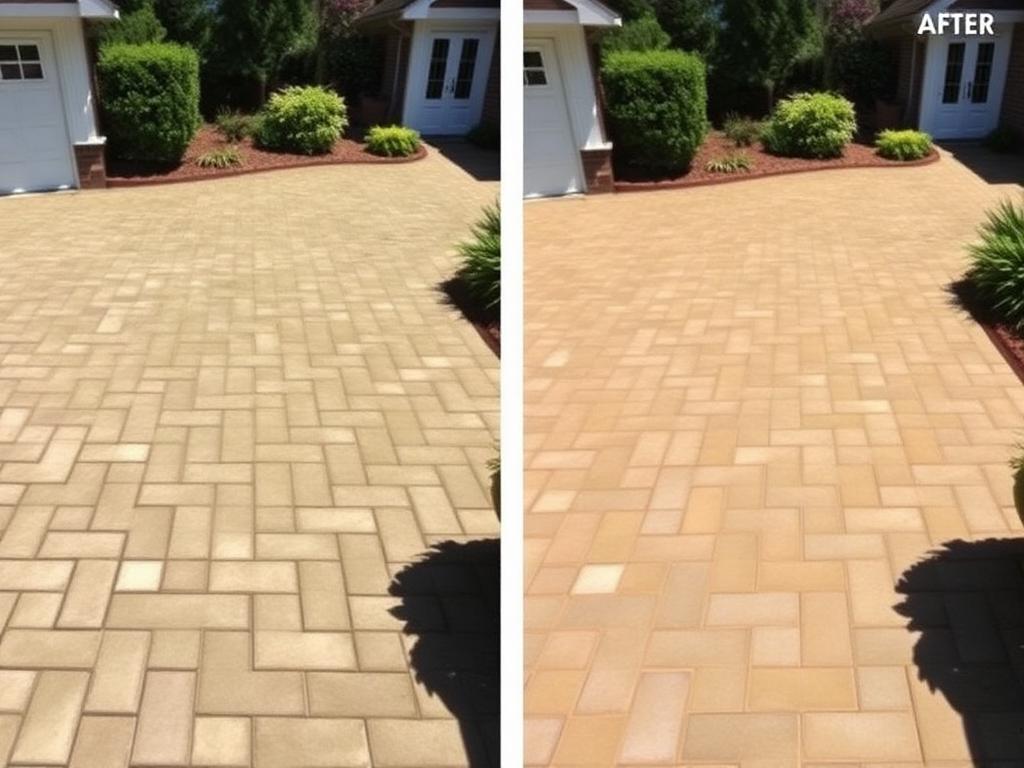
Block Paving Cleaning
Moss, weeds, algae and tyre shadowing removed from every joint and every block, then the joints refilled and vibrated in, because a clean that empties your paving of sand costs you more than it saves.
View service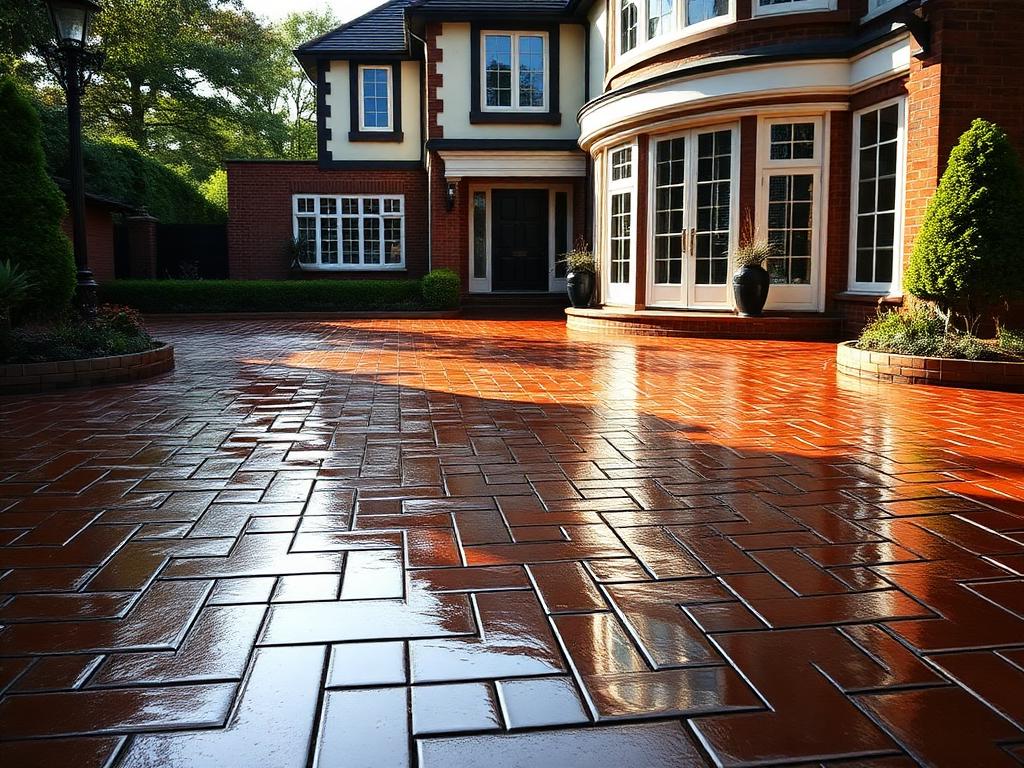
Driveway Cleaning
Get back the driveway you paid for: moss, algae, oil shadowing and black weathering removed in a single visit, joints re-sanded and stabilised, with fixed pricing agreed before we arrive and photographs of the result when we leave.
View service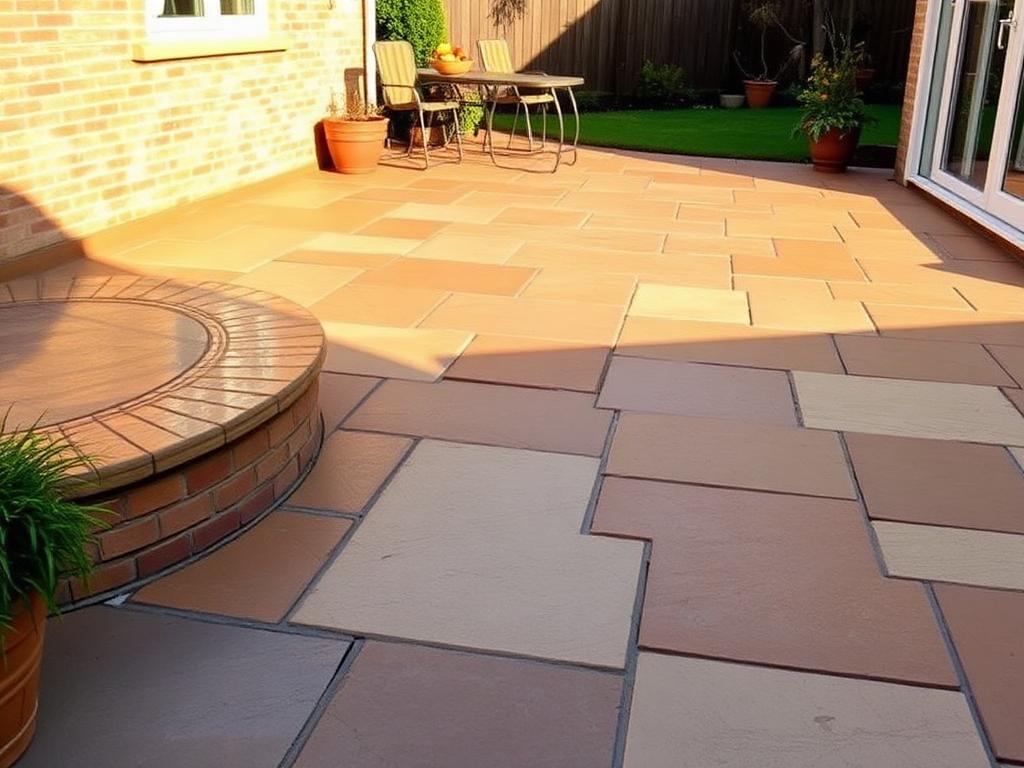
Patio & Indian Sandstone Cleaning
Black spot, algae and weathering removed from natural stone without bruising the surface or blowing out the pointing, so the patio you entertain on looks like the one you chose in the showroom, with fixed pricing agreed up front.
View serviceBack to the homepage for our full range of exterior cleaning services across Cheshire and the North West.
Finish the job properly.
Whether your paving needs sand, sealer or both, we will assess it honestly and quote a fixed, itemised price with no assumptions built in.
- Fully insured & DBS checked
- Fixed, itemised pricing
- Before-and-after photos every job